Materiality
Materiality and KPIs
Materiality
Through the meetings of the Sustainability Committee, JMF has examined its vision and targets for sustainability and carried out efforts toward their realization. As the level of interest toward sustainability is rising, the asset manager has further clarified the responses to be taken by identifying and visualizing related to sustainability materiality through dialogue with global stakeholders and collaborative efforts with other organizations. These issues were identified based on the Mission Statement and Sustainability Policy.
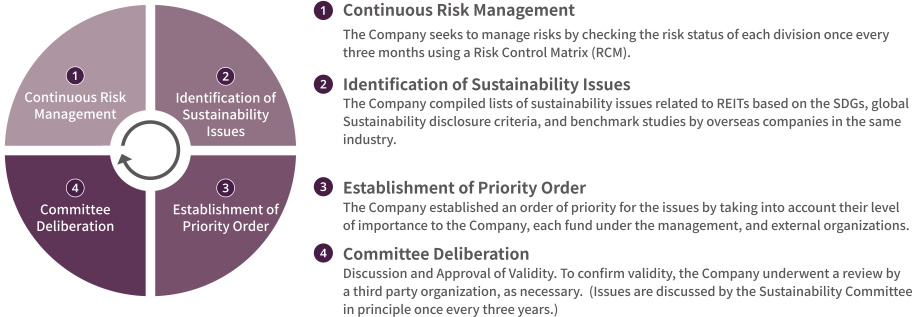
Indicative List of Sustainability Issues
- Climate change response
- Resilience
- Biodiversity
- Water resources
- Waste
- Human rights
- Human capital (employee engagement, Diversity, equity, and inclusion, employee health, well-being, and convenience)
- Tenant health, well-being, and convenience
- Partnerships with stakeholders
- Supply chain management
- Compliance and corporate ethics
- Information disclosure
- Data management systems and information security
Third-Party Opinion | Ryuichi Horie Co-founder and CEO CSR Design Green Investment Advisory, Co., Ltd.
"Since identifying materiality in 2019, your company has conducted regular reviews, steadily addressing each issue while setting KPIs and targets. Based on the status of initiatives, as well as domestic and global trends, you have now significantly revised your materiality. Particularly with regard to "biodiversity," as its importance is growing for companies that deal with real estate, you have advanced your efforts for specifying dependencies and impacts on natural capital, as well as implementing relevant initiatives at your properties. The fact that you now have clearly positioned biodiversity as a materiality issue can be considered an advanced initiative within the real estate management sector. Regarding "human rights", you have advanced the establishment of systems through human rights due diligence, risk management, and monitoring, demonstrating your company's commitment to respect for human rights, which is clearly stated in your human rights policy.
Furthermore, through re-sorting of risks and opportunities, you have more clearly shown why each issue is important. Also, by rearranging KPIs and targets according to the actual status, you have enhanced their alignment with initiatives. I expect you will further deepen your responses to each issue going forward while conducting reviews as necessary."
Materiality and KPIs
In 2025, in response to changes in the times and international trends, a review of materiality was conducted. In principle, materiality is reviewed regularly once every three years.
The revised materiality topics are presented below.
This table can be scrolled sideways.
| Materiality | Risks | Opportunities | KPIs | Targets | Initiatives |
|---|---|---|---|---|---|
| Environmental | |||||
| Climate Change Mitigation and Adaptation | Decrease in tenant sales (or rental income) and increased property damage due to the physical impacts of climate change; deterioration of reputation among tenants and investors due to delayed climate action | Cost reductions through efficient energy use | GHG emissions |
|
|
| Ratio of environmentally certified properties | Maintain an environmentally certified property ratio of 65% or higher (Target year: 2030) | Continuous acquisition of CASBEE Real Estate Evaluation and DBJ Green Building Certification | |||
| Resilience | Increased costs for post-disaster recovery and compensation | Enhancement of property competitiveness | Disaster reporting and communication system coverage; Engineering report acquisition rate |
|
|
| Water Resources | Increased costs due to higher water consumption | Cost reductions through reduced water usage | Water consumption | Prevent year-on-year increases in water consumption |
|
| Biodiversity | Decline in evaluation by tenants and investors that prioritize sustainability | Expansion of investor base Improved sustainability evaluation through contribution to international conservation targets |
Biodiversity-related certifications | Maintain existing certifications |
|
| Waste | Increased waste treatment costs; reputational risk from increased waste generation | Reduction of waste disposal costs through waste reduction |
|
|
|
| Social | |||||
| Tenant Health, Comfort, and Convenience | Decline in property competitiveness |
|
Tenant satisfaction survey | Conduct tenant satisfaction surveys once every three years |
|
| Partnerships with Stakeholders |
|
|
|
|
Continued proposal of environmentally conscious interior design standards for tenants |
| Deterioration of surrounding environment; reputational decline in local communities | Revitalization of local communities; Enhancement of corporate image | Implementation of community contribution programs at properties | Regular support activities for social welfare organizations |
|
|
| Human Rights | Reputational damage due to human rights impacts | Building stakeholder trust | Human rights due diligence frequency | Once per year |
|
| Human Capital (HR Development, DEI, Well-being) |
Loss of talented personnel |
|
① Male childcare leave usage rate ② Female manager ratio ③ Annual training hours ④ Employee satisfaction survey |
① 50% usage rate (At least one employee has taken childcare) ② 20% female managers (2027) ③ 20 hours/person/year ④ Annual survey |
|
| Governance | |||||
| Information Disclosure | Deterioration of relationships with stakeholders including investors; decline in market evaluation | Building trust among stakeholders | Number of appropriate disclosures | Number of IR and investor briefings conducted Publication of one sustainability report per year |
|
| Compliance & Corporate Ethics |
|
Improved customer trust | Compliance training participation rate | 100% participation |
|